
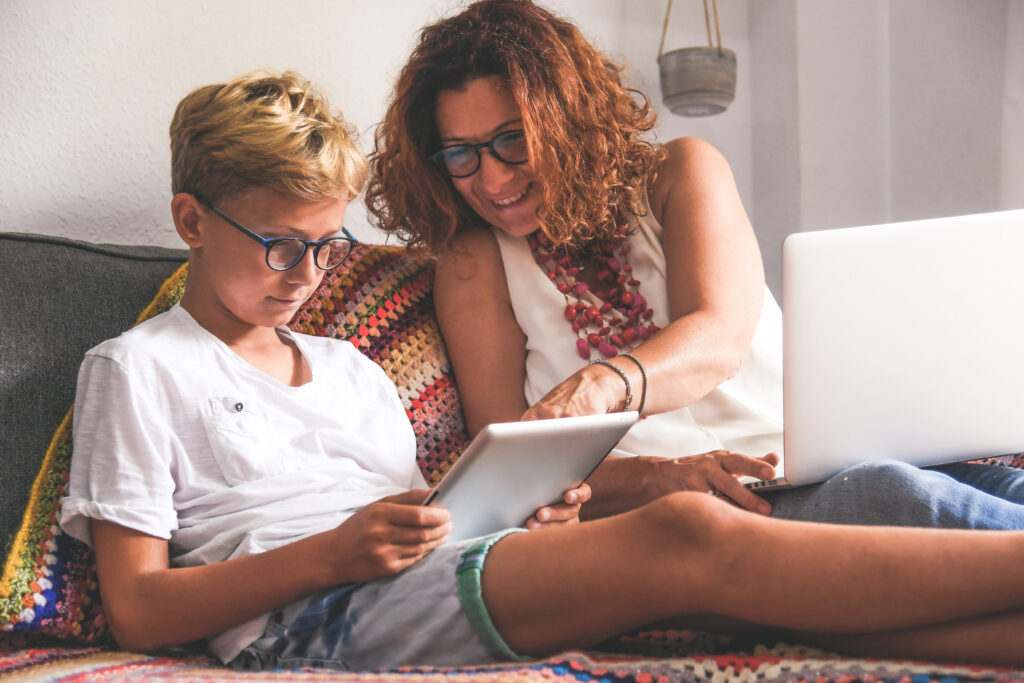
Summer vacation is only a few weeks old, but if you have kids you are probably already asking yourself: How much screen time is too much? According to the American Academy of Pediatrics (AAP), if you want to raise digitally healthy kids that may no longer be the right question.
In updated guidance released this year, the American Academy of Pediatrics (AAP) says parents should spend less time counting hours of screen use and more time evaluating how children engage with technology. To ensure you’re raising digitally healthy kids, AAP recommends focusing on the quality of digital experiences and whether screens are displacing healthy activities such as sleep, exercise and in-person relationships.
“Today’s digital world is far more complex. It’s not just about ‘screen time’ anymore,” said Tiffany Munzer, M.D., F.A.A.P., a pediatrician and lead author of AAP’s new policy statement, in an article she wrote explaining the recommendations. “It’s an entire digital ecosystem that shapes how kids learn, play and connect.”

Engagement vs. escape
That doesn’t mean unlimited scrolling gets a free pass. It means parents can be more intentional about separating productive screen use from passive consumption.
For example, a child using a tablet to learn guitar chords, edit a video or video chat with grandparents is having a much different experience than one spending hours bouncing between social media feeds and short-form videos designed to keep users engaged.
The AAP also encourages parents to think about what screens may be replacing. Is your child still getting enough sleep? Spending time outdoors? Seeing friends in person? Reading? Helping around the house? If the answer is yes, occasional extra screen time during summer break may not be cause for concern.
Social media safeguards
When it comes to digitally healthy kids social media deserves special attention, however, particularly for tweens and teens who may be spending more time online while school is out.
Rather than relying solely on parental controls, experts recommend making social media an ongoing conversation. Ask your child which creators they follow, what apps they’re using and how certain content makes them feel. Discuss how influencers, filters and algorithms shape what appears in their feeds and why not everything online reflects real life.
These conversations don’t have to feel like lectures, experts say. In fact, they’re often most effective when they happen casually, in the car, over dinner or while taking a walk together.

Boredom can be beneficial
Parents also shouldn’t overlook the value of boredom. The Kids Mental Health Foundation, a nonprofit dedicated to children’s mental health, says boredom can actually benefit kids by encouraging them to come up with their own solutions instead of relying on constant entertainment. When children have unstructured time, they’re more likely to engage in creative play, develop problem-solving skills and build independence.
That might mean building a fort, inventing a backyard game, picking up a book or simply finding something to do without reaching for a device.